Kabel Shanghais Shenghua (Gruppe) Co., Ltd.
For a distributor, an electrical wholesaler or a brand owner, the cable itself is only half the product: the other half is the drum label, the print on the sheath, the packaging and the documents that carry the buyer's name. OEM and private label supply is how most of the world's cable trade actually works, yet the details that decide whether it succeeds are rarely discussed: who owns the print block, who bears the cost of a new label design, how much volume justifies a custom colour, and what happens when a batch carries the wrong brand. This guide explains how private label cable supply is organised, what a buyer must specify, and how to keep quality consistent once your name is on the product. Six answers follow on minimum quantities, tooling, liability and documentation.

In its simplest form, private label means the factory builds a standard cable and applies the buyer's identity to it: the print on the sheath, the label on the drum, the packing list and the certificate. Nothing about the cable changes. This is the lowest risk form and the fastest to start, because no new tooling is needed and the technical file already exists.
The next level adds product differences: a custom sheath colour, a specific core colour sequence, a buyer-specific length per drum, special packing for a retail chain, or a printed carton. These changes are still within the factory's normal process but require setup, and they usually carry a minimum order quantity.
The third level is genuine custom design: a new construction, a modified insulation thickness, a proprietary connector or a combined cable assembly. This requires drawings, samples, type testing and, in regulated markets, new approvals. It is a development project, not a purchase order, and it should be planned as one.
Most enquiries described as OEM fall into the first two levels. Understanding which one you are asking for determines the price, the lead time and the paperwork, and it prevents the awkward conversation that happens when a buyer expects custom print on a two drum order.
| Level | What changes | Typical requirement |
|---|---|---|
| Brand only | Print, label, certificate | Print block, artwork, low MOQ |
| Product variation | Colour, length, packing | MOQ per variant, sample approval |
| Custom design | Construction, approval | Drawings, type test, tooling |
The first issue is the print. Cable print is applied by an inline printer with a character wheel or an inkjet head, and the text must fit the circumference and the line speed. A buyer's brand name plus a model plus a standard reference plus a metre marking may not fit in the available space, and the factory will either reduce the font or drop information. Both outcomes need approval before production, not after.
The second issue is artwork ownership and control. Who supplies the print block or the digital file, who approves the proof, and who keeps the master? If the answer is unclear, a later reorder can arrive with a slightly different logo, and in a retail channel that is a visible defect. Keep the approved artwork, the print sample and the approval email together in one file.
The third issue is quality consistency across batches. When your name is on the cable, a compound change by the factory becomes your problem, and the buyer's complaint arrives at your desk. The controls that matter are a retained sample per batch, a fixed specification sheet signed by both parties, and a rule that any change requires written notice. Factories accept that rule readily when it is agreed at the start and resist it when it is raised after a complaint.
The fourth issue is liability and traceability. If a private label cable fails, the question of who is responsible turns on the records: the specification, the test certificates, the batch number and the retained sample. A private label buyer without those records has no defence, even when the factory was at fault. The records are cheap; the absence of them is expensive.
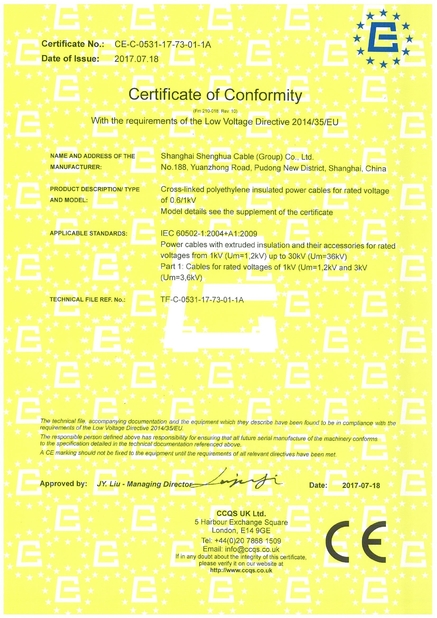
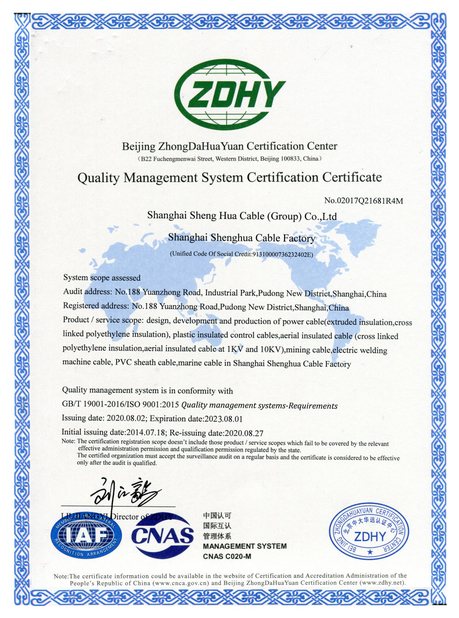
The fifth issue is market approval. A private label product still needs the approvals of the destination market, and those approvals are held by the factory or by the brand, depending on the scheme. Confirm before the first order which approvals exist, in whose name they are held, and whether the certificate covers the sizes you intend to sell. Products such as the Battery Energy Storage DC Cable 1x95mm2 1500V Flexible Tinned Copper XLPO Insulated BESS Cable and the Temperature Rating -20C To 70C Multi Core Sheathed Steel Wire Armored PVC Insulated Cables For Underground Ins show how factory identity and print appear on standard items, which is the template a private label order modifies.
Begin with a specification sheet, not a price request. The sheet states the construction, the standard, the sizes, the packing and the marking, and it becomes the reference for every future batch. Both parties sign it. This single document prevents most disputes, because it converts a conversation into a controlled record.
Agree the marking text and layout in writing and approve a print sample on an actual length of cable. A proof on paper does not show how a small font reads on a curved black sheath. Approve the drum label and the carton print the same way, with photographs kept on file.
Agree the minimum quantities per variant before choosing colours, lengths and print options. Grouping variants reduces the total setup cost. A buyer who wants four colours in small volumes will pay more per metre than one who standardises on two, and knowing the penalty in advance allows a rational choice.
Set the change control rule in the contract: no change to compound, construction, colour or marking without written notice and approval. Add a retained sample requirement per batch and a defined retention period. These two clauses convert a supplier relationship into a managed one.
Plan the approvals early. If the destination market requires a certification in the brand owner's name, that process takes time and may require factory audits. Starting it after the first shipment guarantees a delay. Ask the factory which certificates it already holds and which can be extended to your brand.
Finally, verify the first batch thoroughly, and audit periodically after that. The first shipment sets the standard, and it is the easiest to inspect because volumes are usually smaller. Products such as the Medium Voltage XLPE Pvc Insulated Pvc Sheathed 3 Core Flexible Cable Sh Shenghua, the Household Multi Core Sheathed Steel Wire With PVC Insulation Material and the BVR 1x4mm2 Flexible Oxygen-Free Copper PVC Insulated Building Wire 450/750V House Wiring are typical of the items that move through private label channels, and each one can carry a buyer's identity at little extra cost once the process is set up.
A private label order carries costs that a standard order does not: artwork preparation, print block or digital file setup, line cleaning for a custom colour, label and carton printing, and the administrative work of maintaining a separate specification. Most of these are one-off costs per variant, which is why the per metre price falls as volume rises and why spreading variants across a small order is expensive.
Understanding that structure lets a buyer negotiate sensibly. Instead of pressing for a lower unit price, ask what setup costs exist and whether they reduce with a larger single batch or with a longer commitment. Factories often prefer one large scheduled order to several small ones and will reflect that preference in the price.
The relationship works best when it is documented and reviewed. A specification sheet, an approved sample, a batch record and a periodic review meeting are enough for most buyers. The review should look at delivery performance, defect rates and any specification changes requested by either side, and it should be recorded so that both parties share the same history.
It also helps to keep a second qualified source. Not because the first supplier is unreliable, but because capacity constraints and freight disruptions are normal, and a buyer with a second approved specification can move quickly. The second source must be qualified against the same specification sheet, or the products will differ in ways that only become visible in the field.
Approval schemes differ in who may hold the certificate. Some allow a manufacturer only, some allow a brand owner, and some require the factory to be audited regardless of whose name appears. A private label buyer needs to know which applies before the first shipment, because the answer determines whether the product can be sold at all in the target market.
The practical step is to ask the factory for a list of the approvals it holds, with certificate numbers, product ranges and expiry dates, and then to confirm with the certification body what is required for a branded product. That conversation takes a few days and prevents a container being held at customs for a documentation reason.
Where the approval cannot be extended to the buyer's brand, the alternatives are to sell under the factory's approval with the factory named on the label, or to pursue a separate certification. Both are workable, and both need to be decided before the packaging is printed, not after.
A buyer starting with private label does not need a complex arrangement. Five documents are enough: a specification sheet signed by both parties, an approved print and label sample, a minimum quantity schedule, a change control clause and a retained sample rule. Together they cover almost every dispute that arises in the first two years.
Everything else, from audits to joint branding, can be added once volume justifies it. Starting with the five avoids both the informal arrangements that fail and the heavy contracts that delay a first order.
It depends on the variant. Brand-only marking usually needs little more than a normal order; custom colours or lengths carry a setup charge and a higher minimum.
Agree this in writing. The buyer normally pays for tooling and owns the artwork, with the factory holding a copy for production.
No, and the contract should say so explicitly, along with how the print block is stored and who may use it.
In some markets the approval must be in the brand owner's name. Confirm with the factory which certificates exist and whether they can be extended.
A signed specification, a retained sample per batch, written change control and periodic audits. All four are inexpensive.
Reject it and require re-marking or replacement. The cost is the factory's where the approved artwork was followed correctly on their side.
Private label cable supply succeeds on documents, not on trust: a signed specification, an approved print sample, agreed minimums, written change control and retained samples. Set those up before the first order and the relationship runs smoothly for years. Shanghai Shenghua Cable Group supplies PVC insulated cable under OEM and private label arrangements, with buyer marking, custom sheath colours, custom drum lengths and buyer-branded documents, and it signs a specification sheet and retains a sample for every batch. Send your branding and construction requirements through our contact page and we will confirm minimum quantities and lead times. Typical private label items include the KVV 7x1.5mm2 Oxygen-Free Copper PVC Insulated Control Cable 450/750V Signal Transmission, the N2XY 4x95mm2 Oxygen-Free Copper PVC Insulated Multi-core Power Cable 0.6/1kV Power Station and the PUR Jacket Waterproof Drag Chain Cable 4x1.5mm2 300/500V Tinned Copper Shielded Flexible Cable.
Private label supply is a manufacturing service wrapped in documentation. The factories that do it well are the ones that treat the paperwork as part of the product.